

The Lloydminster Rescue Squad can be depended on when disaster strikes across Western Canada.
From humble beginnings, the squad’s growth has led to it becoming a premier organization, specializing in rescues near and far from home.
Read more: VIDEO/GALLERY: Fire departments tout extrication importance
They are one of a handful of teams that deploy quickly and quietly, without asking for a pay cheque.
According to the squad’s chief, Norm Namur, credit for its creation goes to the late Graham Howey. After responding to multiple collisions where responders were using bare hands and hand tools, he was inspired to make a change.
“We’re touching hydraulics and gas, and then we’re working on patients. So, he decided to look into how to get tools,” recalled Namur.
Howey approached the Lions Club, and with its support, was able to purchase a set of cutters and jaws. Tools the squad still uses today.
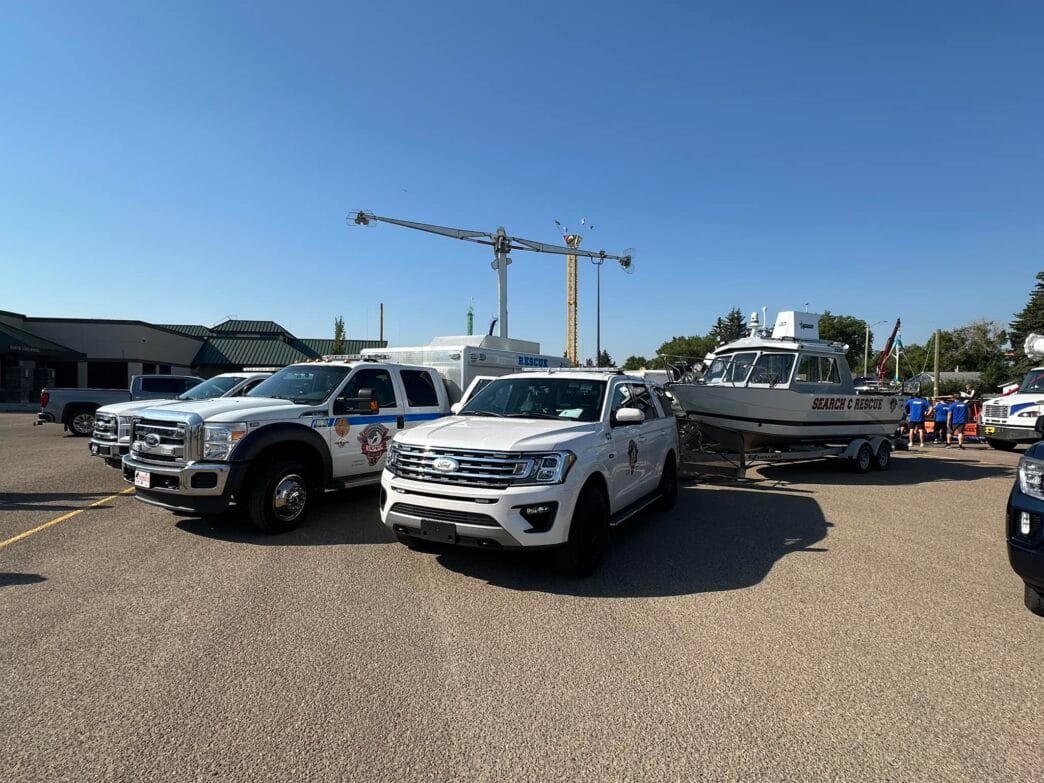
From those tools, six volunteers and a rebuilt truck, they have grown to what you see today at community events, car shows and public information sessions.
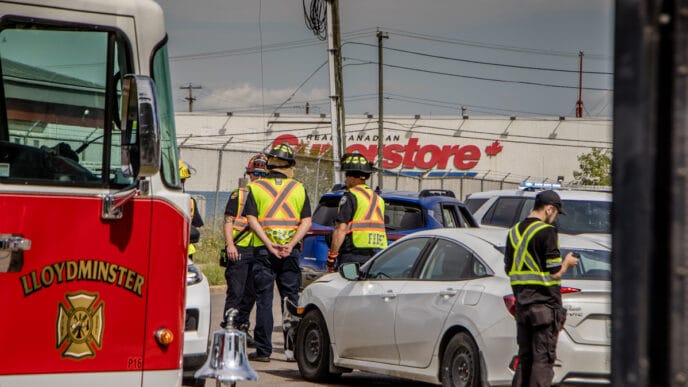
With roughly 22 volunteers, the squad responds to serious collisions, water rescues and calls for missing people. Volunteers do it for the community, and often for people they don’t even know.

“They must have a passion for helping people,” said Namur. “They want to give back to the community.”
Over the years, the squad’s added drones, boats, underwater sonar and ice-rescue tools. All those tools were inspired by calls they’ve attended and realized they didn’t have the right gear at the time.
That gear has taken them well beyond city limits to Manitoba, Saskatchewan, rural lakes and even major cities. Sometimes, people recognize them, even when they are hours away from home.
“Someone said, ‘Hey, I’m from Lloyd. I know you guys,’ ” said Namur, recalling a case near Diefenbaker Lake, located about four hours southwest of Lloydminster. “That’s cool. We’ve had that in Edmonton, too.”
One spring, the team returned to a previous call site with its airboat after a tragedy over the previous winter. Namur recalled finding the victim would provide closure to the family.
“(The airboat) was the only reason we found the individual,” he said, noting there are very few of them across either province.
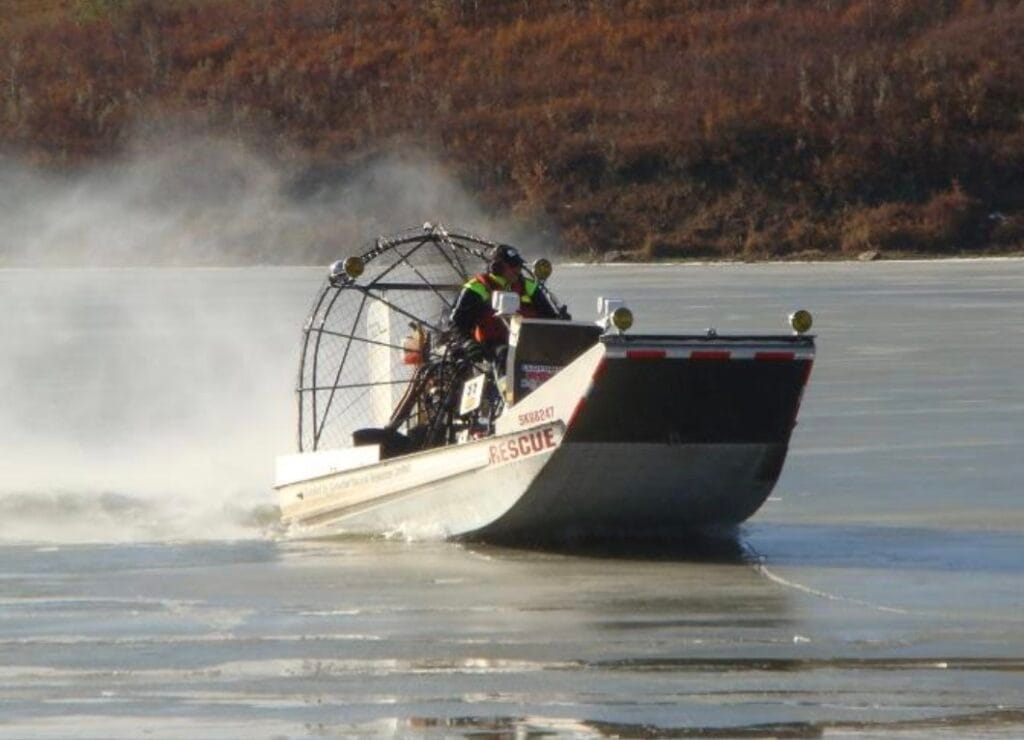
Today, just like with the Lions Club, community donors fund many of the tools the squad uses. Names like Cenovus Energy, CNRL and Boundary Ford are among the big supporters. However, Namur says the smaller donations matter just as much.
“You start adding those up, too,” he said. “Without them, Lloyd Rescue would certainly have a different look and certainly a different outlook.”
The team also visits local schools to teach water safety, life jacket use and overall preparedness.
To stay current, the squad heavily leaned into new technology and uses side-scan sonar to sweep lakes and rivers when searching for drowning victims. Drones give them aerial views to help spot missing people and GPS tracking and radio systems keep everyone connected in real-time.

Last year alone, the public and other charities helped the squad raise more than $765,000 for new gear and training.
“Having the right tools saves lives,” said Namur. “It lets us work smarter, not just harder.”
Another change Namur has seen is a decrease in the squad’s service area.
“We used to go everywhere,” he said. “We went to the County of Vermilion River, up north, right to Payton.”
They still respond to calls for service in the RM of Britannia, however, most local agencies now have their own rescue tools.
“If our response area gets smaller, but more and more people can do the same thing we do, that’s OK,” he said. “That means the individual in trouble is getting aid faster.”
As others catch up, the Lloydminster Rescue Squad remains ready and continually innovates to improve, ready for the next call and save lives across Western Canada.
Read more: Rescue Squad upgrades ROV