

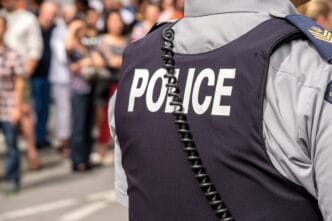

At times, when police officers are conducting their duties, the use of some level of force may be necessary.
This can be for several reasons, but generally, it’s something needed to bring an uncooperative arrested person into custody.
Police are not allowed to apply force to anyone at any time, but rather it is something that comes from, or is allowed by, specific authorities and is required to be applied to a person reasonably, or the officer is held accountable. The specifics of any given situation would dictate the use and type of force utilized. A police officer’s tools, such as OC spray (pepper spray) and a conducted energy weapon, can also be part of the use-of-force equation.

The use of force can be a contentious issue due to its nature, and in some instances, may shock the public to witness. This is one area of policing that is heavily scrutinized after the fact, and that can include being dissected in a court of law.
The use of force and any escalation is based on the behaviour of the offender, also taking into consideration any weapons they may possess or have access to. Essentially, the use of force by a police officer can be a response to a given situation as presented to the officer(s). This is why seeing a short video clip of the use of force without knowing all the specific details of the incident skews the viewer’s perception.
It’s never ideal to use force, but fortunately, only about 0.1 per cent of police contacts with police clients result in any use of force, regardless of the amount.
A minor amount of force may be needed if someone is pulling away but not overly resisting; however, this could escalate to an officer responding with a firearm. This is all based on the specifics of the incident, especially the
behaviour of the offender.
As mentioned, the authority to use force has to come from somewhere. Section 25 of the Criminal Code is where the protection of a person using force is laid out. The section is very much relied upon in policing.
Section 26 of the Criminal Code speaks specifically to excessive force. This very short section states that those authorized by law to use force are criminally responsible for any use of excessive force.
The Identification of Criminals Act also provides specific authority for the use of force for purposes within that Act. This Act compels people to provide photographs, fingerprints and other measurements, as authorized, when someone has been charged or convicted of specific offences.
It truly is a last resort for law enforcement because compliance is best for everyone involved. We have had numerous local officers injured while carrying out their duties because the use of force became necessary.
There is a lot more than just the above governing the use of force, and it’s treated very seriously by both police and the courts.
– Staff Sgt. Jerry Nutbown, is the NCO in charge of the Lloydminster RCMP detachment’s General Investigation Section. Stay tuned for future articles from the Lloydminster RCMP.
This column was originally published in the Aug. 21, 2025, edition of the Meridian Source.
Read more: Word on the beat: Traffic