


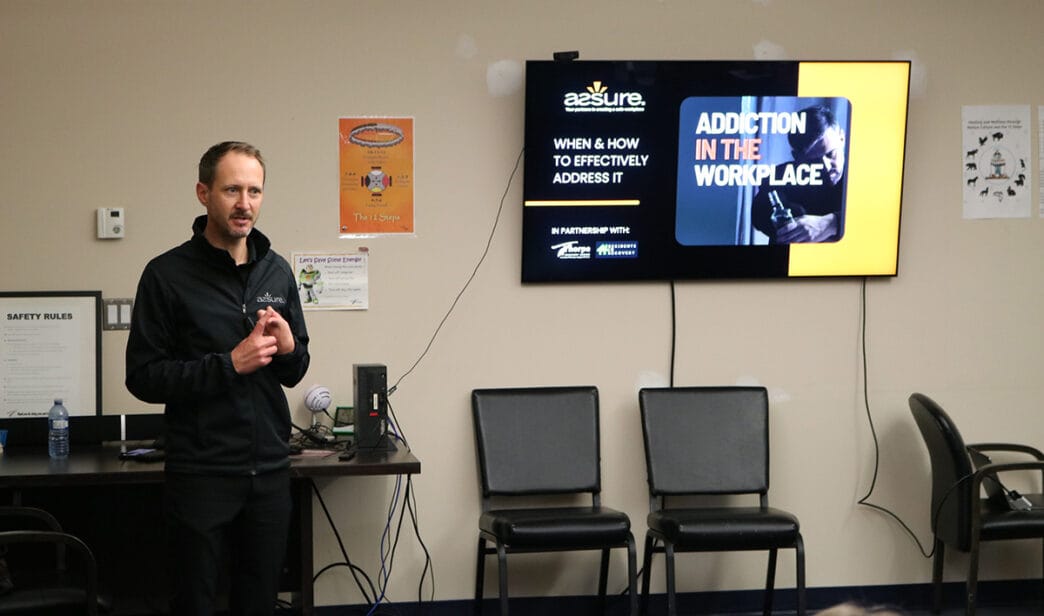
Recovery Week in Lloydminster is in full swing and a Sept. 3 workshop spoke to the importance of addressing addiction in the workplace.
The event was hosted at the Thorpe Recovery Centre and featured presentations from local experts Vera Koster, clinical director at Thorpe and Jon Rokochy, founder and CEO of Assure Occupational Testing.
Read more: Running for a solution
Rokochy, who has a master’s in counselling, got his start at Thorpe.
“One of the first places I got started working professionally was here at Thorpe Recovery Centre,” he said. “I worked here for a few years doing inpatient addiction treatment and then outpatient at the downtown office as well.”
When it comes to addiction in the workplace, Rokochy says it has a major impact on the Canadian economy.
“Statistically, the cost to the Canadian economy from substance use, from substance addiction, is over $22 billion annually,” he said.
He explained the impact comes from an impact to productivity.
“How do you come up to $22 billion is thinking about people in the workplace who are coming to work intoxicated, not focused, mind is not on the task,” said Rokochy. “People not showing up for work as often, they’re taking more sick days, they’re late.”
Incidents also have a major impact on the economic blow.
“As well as the cost of incidents, people coming to work under the influence are more likely to get into incidents and damage company property and vehicles,” he said.
When it comes to dealing with addiction in the workplace, Rokochy says it’s important to start with a solid foundation.
“I always recommend company’s start with a solid drug and alcohol policy, well-written, well thought out, that protects employees as well as the company,” he said.
The policy is important to protect both the employer and employee.
“It protects the employer, upholds the rights of the individual and the rights of the company,” he said.
While policy is important, training your leadership team to recognize impairment is also a vital step.
“Training your supervisors and managers about how to recognize it and what do to,” said Rokochy. “How to intervene or remove someone from duty when they show up to work and they’re not fit for duty.
“Doing it in a way that upholds human rights and upholds your drug and alcohol policy. Upholds dignity of the employee as well.”
If someone is identified to be impaired on the job, it’s important to remove them from duty as quickly as possible and assessed to determine next steps.
“When people are found to be not compliant with a policy or with the drug and alcohol test, getting that person a professional substance abuse assessment to determine what level of intervention and treatment does this employee need,” said Rokochy.
The company should also create a return to duty plan for that employee.
If you or someone you know is struggling with addiction, there are ways to get help.
“Go to HR, talk to safety managers, talk to your supervisor. Most companies are going to have an EAP program you can get support through,” said Rokochy. “You can reach out to Thorpe Recovery Centre here locally; there’s many different treatment centres across the country.”
Rokochy says it’s important to help each other when we’re down or struggling.
“You’re helping. As an employer, as a manager, you’re helping staff you care about,” he said. “A wonderful gift we can give somebody who’s struggling (is) to offer them some support.”
Recovery Week continues until Sept. 6, wrapping up with Recovery Day Lloydminster with a barbecue at Bud Miller All Seasons Park featuring the Lloydminster Men’s Shelter’s Running for Shelter fundraiser.
Read more: GALLERY: School returns with excitement in Lloyd