

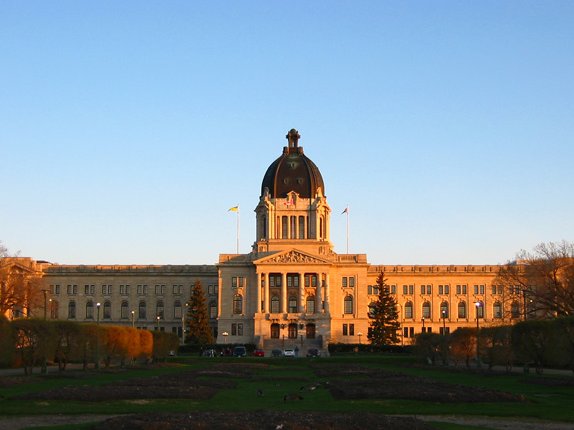
Saskatchewan is projecting a $427 million deficit at mid-year, an increase of $79 million from the first quarter, a sharp contrast to the $12 million surplus outlined in the 2025-26 provincial budget.
Despite challenges such as lower oil prices and global tariffs, the province’s economy remains among the strongest in Canada, with the lowest deficit per capita compared to other provinces and the federal government.
Read more: Festival of Trees gala a Christmas delight
“Saskatchewan’s economy remains resilient in the face of global economic uncertainty,” said Deputy Premier and Finance Minister Jim Reiter. “Most of our exports comply with CUSMA, and our producers have worked hard to access new markets, keeping our economy in a comparatively strong position.”
The mid-year forecast shows total expenses are expected to rise $521 million, or 2.5 per cent, above budget. Significant increases include $295 million for the Saskatchewan Public Safety Agency to respond to wildfires, $250 million to manage health care pressures, and $114 million for pension costs. These increases are partially offset by lower-than-expected crop insurance claims.
Total revenue is projected to rise by $82 million, or 0.4 per cent, from budget. Federal transfers are up $273 million, while other provincial revenues, including fees and gaming, are up $129 million. However, these gains are largely offset by a $292 million drop in SaskPower net income, following the removal of the federal carbon tax from customer bills, and a $93 million decline in non-renewable resource revenue due to higher exchange rates and lower oil prices.
“This mid-year update aligns closely with what we reported at first quarter,” Reiter said. “Our government remains focused on supporting those affected by this year’s unprecedented wildfire season, addressing health care pressures, and providing affordability relief through income tax reductions and the removal of the carbon tax from SaskPower bills.”
The province’s total gross debt is now forecast at $39.3 billion by fiscal year-end, an increase of $962 million, or 2.5 per cent, over budget. Saskatchewan continues to have the second-lowest net debt-to-GDP ratio among all provinces.
Economic growth remains strong, with GDP expected to rise 1.7 per cent in 2025, the third highest among Canadian provinces. Growth is being driven by construction, natural resources, and agriculture, supported by population growth, employment gains, and leading housing starts.
The full 2025-26 Mid-Year Report is available online through the Saskatchewan Publications Centre.
Read more: Lloyd singer-songwriter talks new music and mental health