

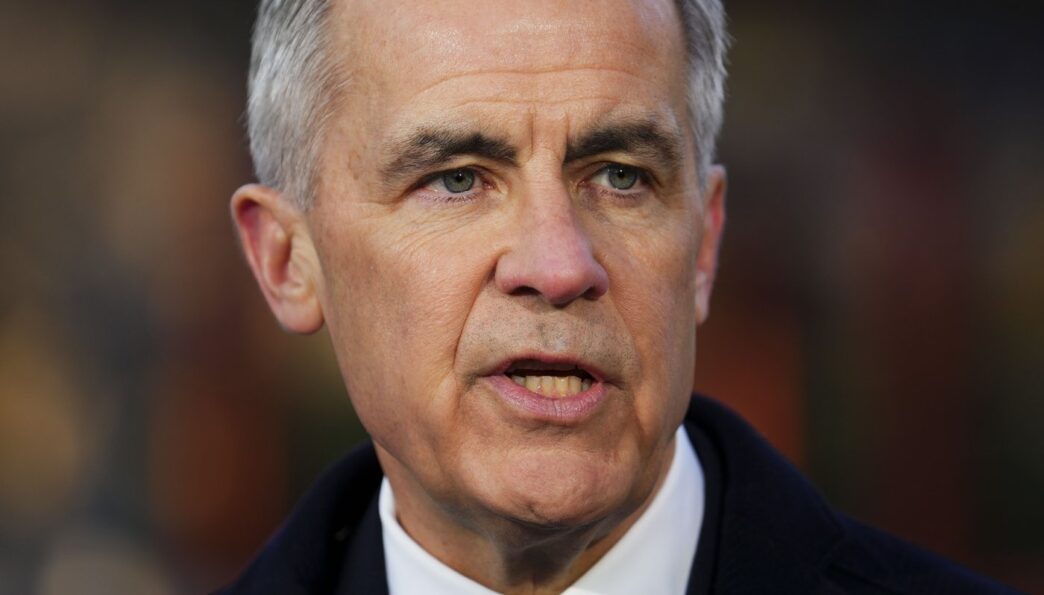
QUÉBEC — Prime Minister Mark Carney is gathering his cabinet in Quebec City today for two days of meetings focused on the economy, affordability and security.
The cabinet retreat begins the day after Carney’s return from a nine-day overseas trip to drum up new investment for Canada. It also comes just ahead of the return of Parliament on Monday.
Experts say the retreat is an opportunity for the government to discuss internal issues — like interprovincial trade and major projects — though much like at the World Economic Forum in Switzerland, U.S. President Donald Trump, tariffs and Greenland will likely dominate much of the discussion.
“What they should be focused on is what’s the game plan for getting Canadians ready for what’s going to be a very rough year, with the prospect of more tariffs, more pain and (Canada-United States-Mexico Agreement) negotiations that are clearly going to be taking place under the barrel of a tariff gun,” said Fen Osler Hampson, an international affairs professor at Carleton University.
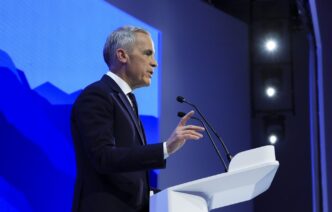
The retreat is taking place on the heels of Carney’s World Economic Forum speech that urged middle powers to band together against economic coercion by “great powers.”
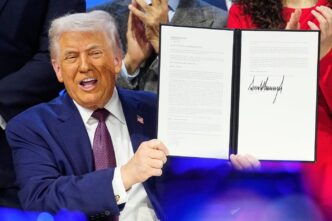
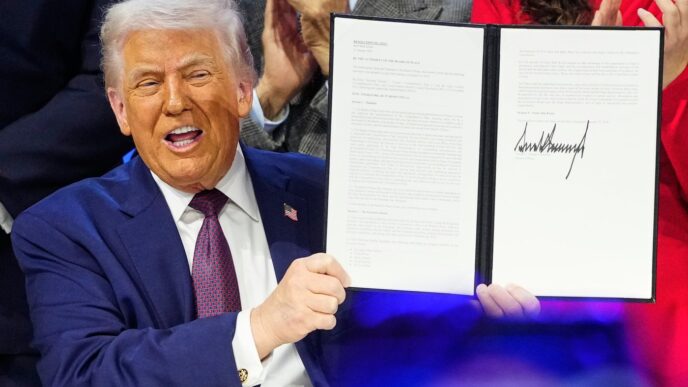
It has drawn a number of positive reviews from all over the world — some calling it stark or historic — but not from Trump, who said during his own appearance in Davos that the prime minister should be “grateful” to the U.S.
“Canada lives because of the United States,” Trump said in his speech Wednesday. “Remember that, Mark, the next time you make your statements.”
Jennifer Welsh, director at McGill University’s Max Bell School of Public Policy, said she expects there will be conversations at the retreat about navigating the renegotiation of the Canada-United States-Mexico Agreement on trade, better known as CUSMA.
She also said ministers will have to discuss how exactly they plan to diversify Canada’s trade relationships and build the economy.
“So what should be the priorities and what do international partnerships mean? How are we going to actually pursue them and realize them?” she said.
During Carney’s trip abroad, he finalized a deal to get China to lower agricultural tariffs in exchange for opening some market access for Chinese electric vehicles. He also secured deals on defence, trade and foreign investment during his visit to Qatar.
In a news release Wednesday, the Prime Minister’s Office said Carney and his cabinet will “continue to diversify our partnerships abroad and build our strength at home to deliver greater stability, security, and prosperity for Canadians.”
Osler Hampson said the ministers should also take time in Quebec to discuss making faster headway on major projects.
“We’re not going to be selling much to the world unless we build our infrastructure, build our ports, build our rail, build pipelines,” he said.
“That’s got to happen sooner rather than later if there are going to be jobs for those who are going to be thrown out of work.”
Parliament is set to resume on Monday for the first time since December 11. Carney’s Liberal government is two seats shy of a majority, after two Conservatives crossed the floor in the fall and the departure of Toronto MP Chrystia Freeland earlier this month.
The Liberal budget passed the House of Commons in November; now the government must pass legislation to implement parts of that budget. That bill passed second reading before the break but still needs to go to committee for study before a final vote in the House of Commons and then debate and votes in the Senate.
In the fall, the Liberals introduced three justice bills — which have yet to be passed by Parliament — that would implement a long list of changes to the Criminal Code.
They include new intimidation and obstruction offences in Bill C-9, measures in Bill C-14 to make bail more difficult to obtain and to allow for consecutive sentencing for some crimes, and Bill C-16’s move to restore mandatory minimum imprisonment penalties.
Colin Robertson, a former Canadian diplomat and fellow at the Canadian Global Affairs Institute, said the cabinet’s agenda should include moving forward legislation in Parliament.
“There’s a sense now that Carney’s put a lot out there, but criticism is around delivering,” Robertson said. “They’ve got several bits of legislation that are on the books, and I think that that will be something that people will be seeing — how does he manage Parliament?”
Robertson said it’s significant that the retreat is being held in Quebec, given that the province is “always a battleground.”
“The seats they’ve got there, they have to sustain,” he said. “I think it’s prudent on his part to do it there and show off the Quebec ministers again.”
This report by The Canadian Press was first published Jan. 22, 2026.
—With files from Kyle Duggan, Anja Karadeglija and Alessia Passafiume
Catherine Morrison, The Canadian Press