

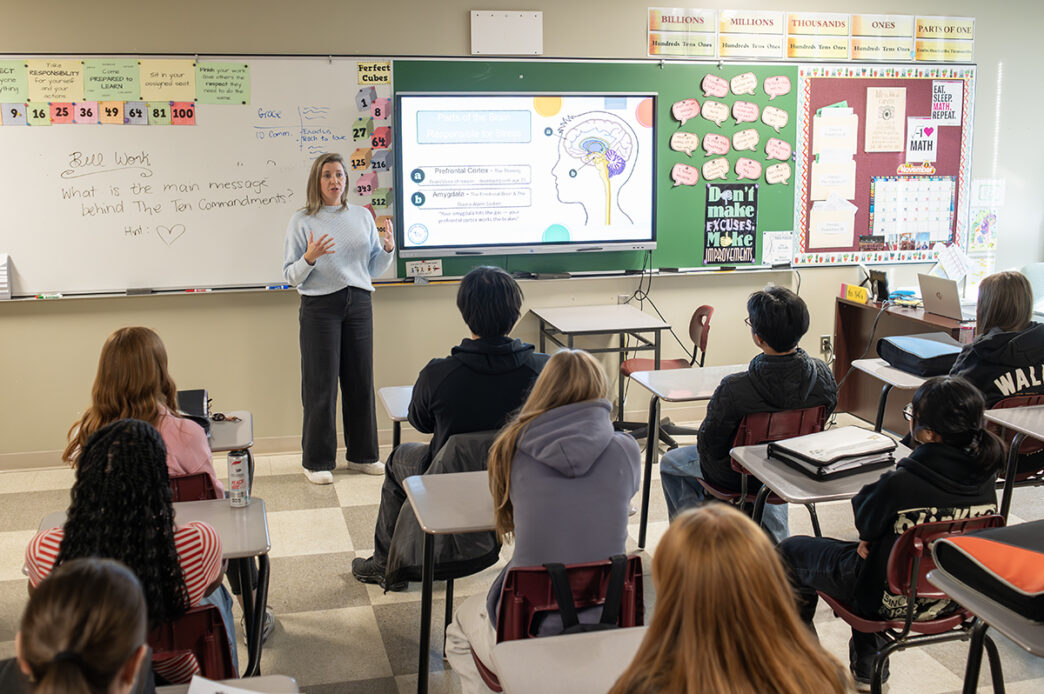
Mental health education is starting in the classroom at Holy Rosary High School (HRHS).
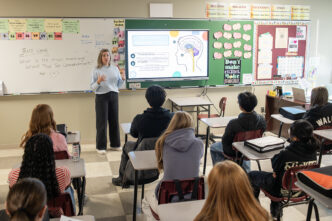
Students at HRHS are gaining new tools to manage academic pressure thanks to mental health presentations through the Lloydminster Catholic School Division’s Mental Health Capacity Building program.
Read more: Holy Rosary nets zone title, qualifies for 3A provincials
The program has been steadily supporting students, staff, families, and the broader community. Led by co-ordinator Kamryn Reschny and promotor Tina Freeman, the team has already reached approximately 450 students and 20 staff members through classroom visits and surveys.
Taylor Weaver – Meridian Source
“Our program at Holy Rosary was implemented at the beginning of September,” said Reschny. “We were asked to go into the school, evaluate the mental health needs of students, staff, communities, and families, and develop programs around those findings.”
The initiative focuses on four key groups: students, staff, families, and the community. Reschny explains that the program shifts focus throughout the year, emphasizing community work in the summer and providing most support to students and staff during the school year. Family supports continue year-round.
A recent student survey revealed that academic stress and pressure are the top mental health concerns at HRHS. For Reschny, a 2021 graduate of Lloydminster Comprehensive High School, these findings come as no surprise.
“These students are dealing with academic stress, relationship struggles, and part-time jobs, all while going through the most pivotal time in their lives, which is university preparation,” she said. “Our goal is to help them pinpoint what’s causing their stress, provide coping strategies, and reinforce the idea that ‘my mental health matters.’ It’s better to address these challenges now than to let them build up.”
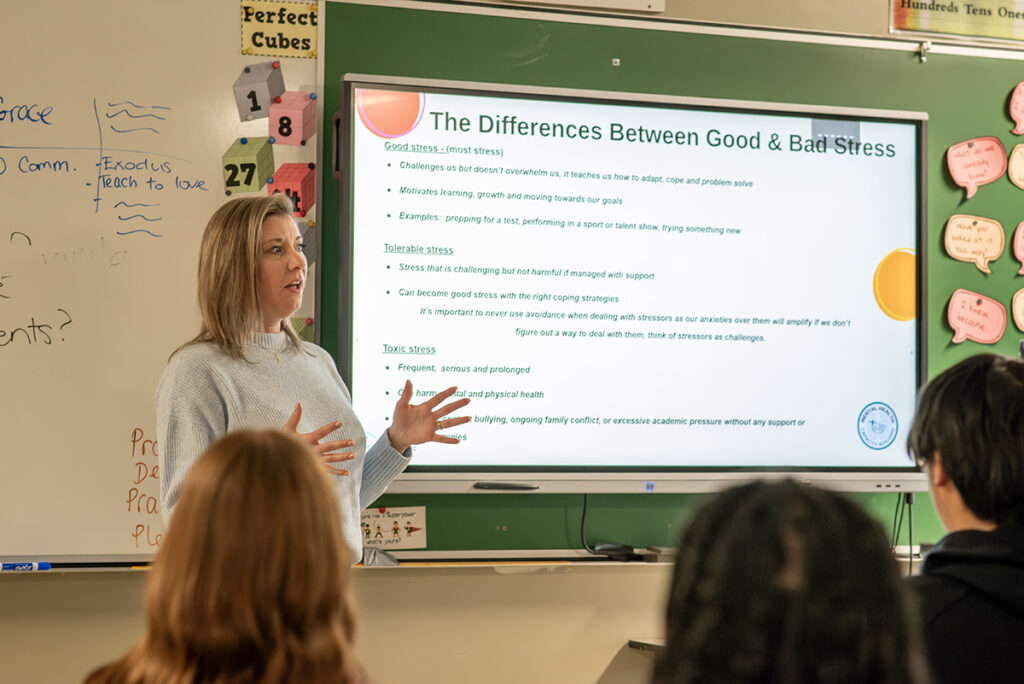
The recent classroom presentations begin by explaining how the teen brain differs from the adult brain, particularly in how teens may react more quickly and have less time to process situations.
“We then distinguish between the two and give students strategies to manage the stress they’re experiencing,” said Reschny. Techniques include box breathing, progressive muscle relaxation, and encouraging students to lean on trusted support systems.
According to Reschny, the response has been overwhelmingly positive.
“We’ve received a lot of positive feedback from the principal and students, and staff have come up to us in the hallways to say we’re doing a great job,” she said. “Staff have told us that students need to hear this information. We’ve also been asked to share a presentation with the staff so they can have these strategies accessible to students.”
The team has also taken steps to support staff directly, creating mental health-themed gift bags and brightening shared spaces such as the staff room.
As the school year continues, the Mental Health Capacity Building program plans to expand its efforts, continuing to bring mental health education and coping strategies directly into HRHS classrooms.
Read more: 20 Questions with Peyton Oborowsky