

As Albertans head to the polls for the final day of voting in Alberta’s referendum on Monday, residents of Lloydminster are grappling with a question most Canadians never have to consider: what happens to a city when the province it’s half built in decides to leave the country?
Read more: Sask. building permits jump 32.5 per cent, builders eye region
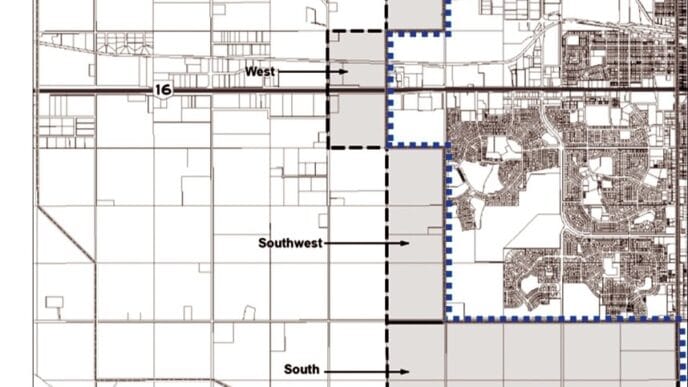
Lloydminster is split almost evenly down the middle by the Alberta-Saskatchewan border, with roughly 32,000 people living under one municipal government but two provincial governments. The city’s RCMP detachment sits on the Alberta side. Its only hospital sits on the Saskatchewan side. Schools teach the Saskatchewan curriculum citywide, and the whole arrangement runs on a charter signed by both provinces.
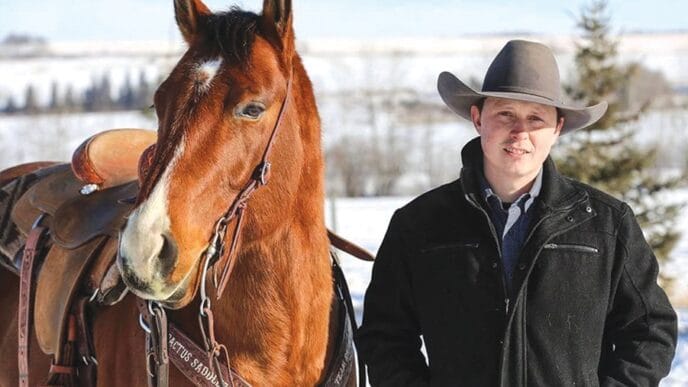
That charter, not a federal treaty, is what makes the Border City work. Former Lloydminster mayor Jeff Mulligan, who was in office when the charter was last updated in 2013, says it was never built to survive one of its two partners leaving Canada.
“That charter is signed on by two provinces, not a province and a separate country,” Mulligan told CTV News. “This is not an international agreement.”
Mulligan, now a senior advisor at Astec Safety Inc. after three decades running businesses in Lloydminster, said the practical fallout would go well beyond paperwork.
“Things as simple and as basic and foundational to Lloydminster’s existence would be thrown out and have to be restructured,” he said.
He also worries about who would even be paying attention to the city’s problems while two provincial governments sort out a much bigger divorce.
“Who would address this very small sector of the population in Alberta, when the bigger sector of the population has big concerns?” Mulligan said. “There would be very little focus on Lloydminster by either side and it would be left to its own devices.”
Business owners who cross the border daily share that unease. Steve Boyce, who operates on both sides of the line, called the prospect of separation “a headache” in the same CP24 report on the city’s predicament.
“It wouldn’t turn out the way people think,” Boyce said. “It is a messy thing. I cannot imagine it being straightforward.”
Mulligan said even the uncertainty of the referendum campaign itself, which followed last year’s approval of the referendum question and a provincewide Alberta Next consultation tour that stopped in Lloydminster, is enough to spook investors.
“The results of this discussion on the referendum would be devastating to our economy and devastating to our city in the near and midterm,” he said.
Lloydminster voters have not been shy about weighing in. Lines formed at the city’s lone polling station when advance voting opened last week.
Larrin Thiessen, a Lloydminster resident in his early 20s, said the referendum has dominated conversation among his friends in a way he hasn’t seen before.
“It is the first time that I have noticed that people my age have all been talking about going to vote,” Thiessen said, adding “there needs to be some sort of change” without revealing how he cast his ballot.
Others were more direct. Brad McLeod, a 40-year Lloydminster resident, said he’s frustrated with how Ottawa has treated Alberta.
“The challenge we have is Ottawa draining our finances constantly and treating us like we don’t exist,” McLeod said.
Not everyone agrees separation is the answer. Voter Shirley Davidson told reporters she thinks leaving Canada would hurt more than it helps.
“I think it would be terrible. It would cost us so much,” Davidson said.
Alberta’s referendum includes 10 questions in total, among them whether the province should remain in Canada or hold a second, binding vote on independence down the road. Voting closes Oct. 19, and for Lloydminster, the answer will shape far more than politics — it will decide whether a century-old experiment in sharing one city between two provinces still has a future.
Read more: Saskatchewan RCMP SERT September crackdown yields 46 arrests and 44 warrants