




Lakeland College joined in celebrating the 50th anniversary of Alberta’s Green Certificate program, marking half a century of helping students launch careers in agriculture.
The celebration took place at the college’s Vermilion campus on Oct. 31.
Read more: Lakeland College hosts livestock event
First introduced in 1975, the Green Certificate program was the first of its kind in Canada. The Alberta government created it to train the province’s future farmers by combining high school education with hands-on agricultural training.
“Since the start of the Green Certificate Program, thousands of students have graduated with the skills and training they need to start a career in agriculture,” said RJ Sigurdson, minister of agriculture and irrigation.
“The program empowers trainees to learn at their own pace, giving them hands-on experience of working for a local farm or agri-business. It continues to support ag employment in our rural communities, sparks new ideas and engages the next generation in the constantly changing world of agriculture.”
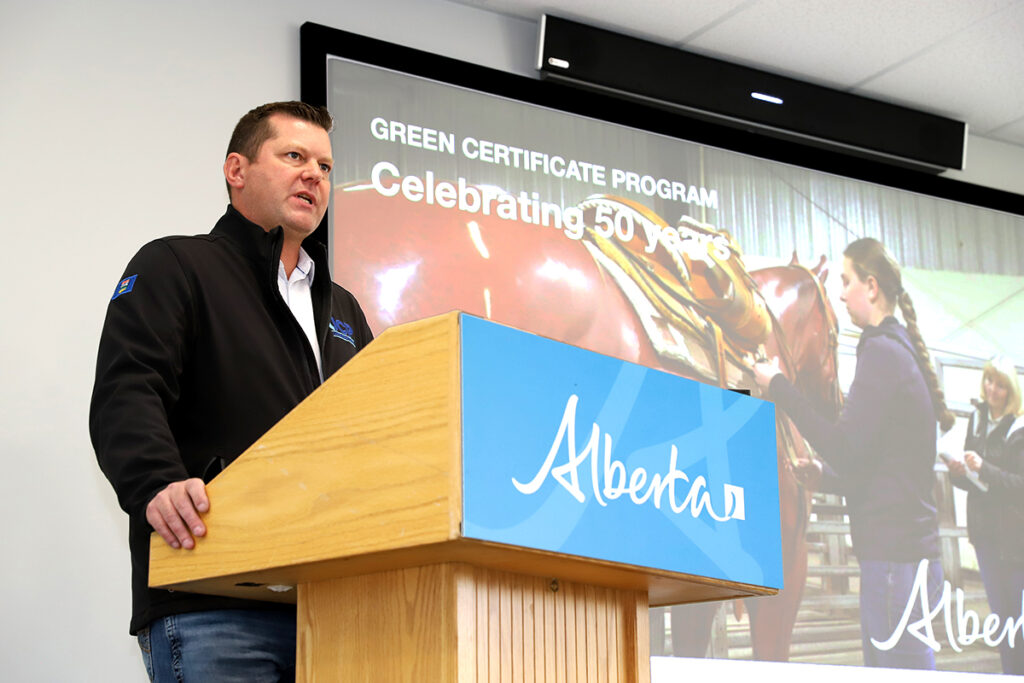
For 50 years, the program has helped high school students gain real-world experience, build practical skills, and earn high school credits while preparing for work or further studies in agriculture. Students develop the knowledge and confidence needed to pursue agricultural careers through mentorship with industry experts.
The program is delivered in partnership with Alberta’s agriculture industry and four regional colleges: Northwest Polytechnic, Lakeland College, Olds College and Lethbridge Polytechnic.
“Lakeland College values the half-century of our involvement with the Green Certificate Program. We’re a great fit as Lakeland and Green Certificate are both about hands-on learning,” Lakeland College president and CEO Alice Wainwright-Stewart.
“We’ve benefited as much as the farmers, ranchers, trainees and high school students from the program. We’ve gained instructors and students from our connection to it (and) seen generations of family be connected as trainees, testers, students and two regional coordinators.”
Participants can choose from 11 agricultural career paths, including specializations in areas such as crop production, beef, dairy, sheep and equine management. Upon completion, students earn 16 high school credits and are qualified to work in an agricultural occupation of their choice.
Read more: Lakeland College joins Alberta’s wildfire response system