

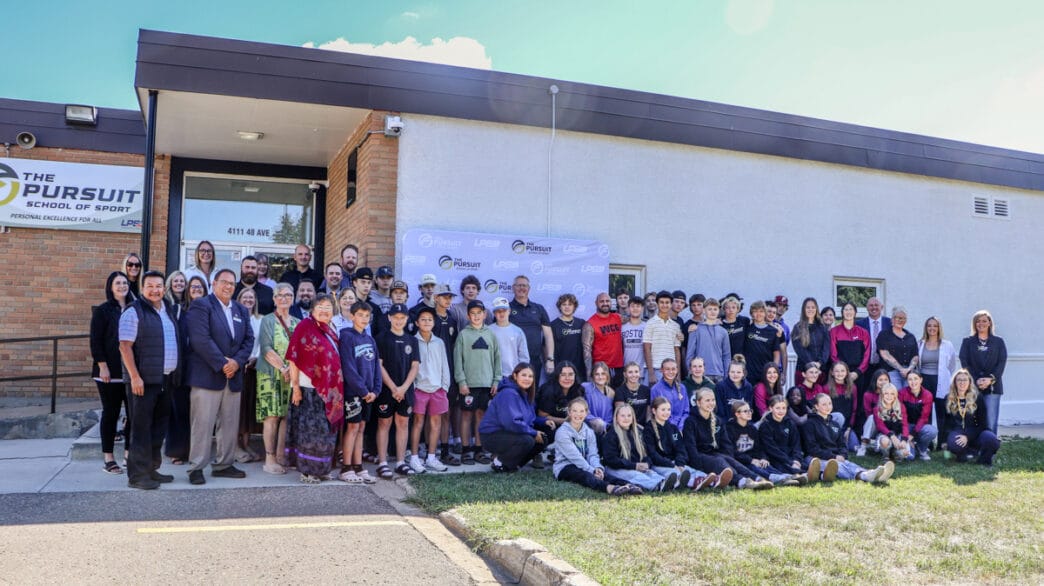
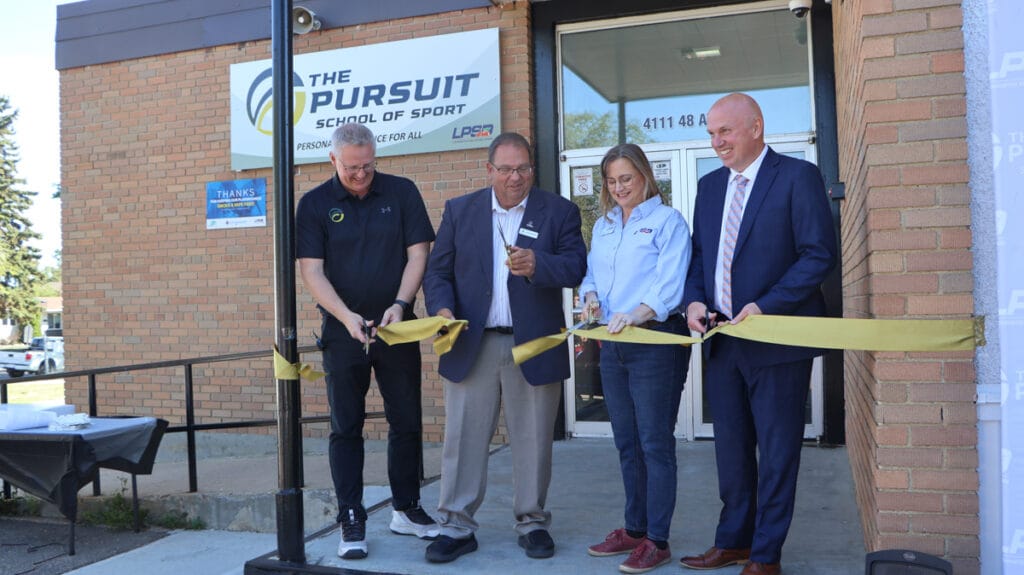
The Pursuit School of Sport officially opened its doors this week in Lloydminster.
Principal Doug Smith shared how the school came together, the balance between athletics and academics and what success will look like down the road.
Read more: LPSD to add school of sport this fall
Q: Could you share a story of one aspiring athlete whose schedule inspired Pursuit’s flexible model?
Smith: “One of our golfers is going to train through the day but has two weeks where they’re gone. They definitely need that flexible model. Their priority when they’re away will be their sport and we’re going to help them when they get back, make sure they’re caught up with academics.
“Our gymnasts, regular school, they would do 9 a.m. to 3:30 p.m. Then they train until 9:30 p.m. Our model allows them to train a little bit during the day and have some free time, personal time at night. Our hockey kids are usually gone Friday, Saturday, Sunday. So we’ll get the academic part done Monday to Thursday, and then they can focus on their athletics.”
Q: How did you approach building the four-day school model?
Smith: “We toured the ST school in Saskatoon. Our senior leadership toured the National Sports School in Calgary. They brought back a bunch of models and we hashed them around.
“We have kids all the way from Billings, Montana, coming up. To figure out the curriculum here versus the American curriculum, we need to work with home schools. Some students will go back in April once their season of play is done and carry on with their curriculum at their home school. We have to make sure what they do here transfers to Alberta, and what they do in second semester, they can carry on at their home school.”
Q: You’ve partnered with many local sports organizations. How does that shape the school’s identity?
Smith: “We’ll take care of the academics, which I call the written curriculum. But there’s so much we teach about the unwritten curriculum. Having that partnership, the time management, responsibility, nutrition, mental health and peak performance, we’re going to rely on partners and actually bring them in to do some speaking.
“The students here will 100 per cent get their academics and there’ll be more to it, which is an awesome model.”
Q: What strategies are in place to support students and build community?
Smith: “We’re going to have a wall of fame. One of the neat things we saw at other schools was a map of where our kids come from and what sport they do. Here in the Commons area, we have the TV. We’re going to live-stream their games or competitions and really celebrate who they are individually. Collectively, we’re going to be celebrating those individuals. So a real sense of a team here.”
Q: How will Pursuit support student well-being and academics?
Smith: “We have an educational support teacher. We’ll have guidance counselling or mental health counselling available. The way the schedule’s set up and the way teachers are delivering curriculum, it’s very flexible.
“We have eight blocks here. High school students may have four classes plus two training blocks, which leaves them with two additional classes. We call that pursuit time or flex time, where they work with a teacher to get caught up, do homework or get organized. There’s time built in the day for that.”
Q: What are the biggest selling points for families?
Smith: “The flexibility, the small class sizes, the Fridays off to make trips for competitions, and just seeing the breadth of programs we can offer in Grade 6 through 12 excites a lot of kids and families.”
Q: Looking ahead, what success stories would you love to see emerge?
Smith: “I’d love to celebrate kids moving on past us, like we had a role to play in their academics and supporting them in their journey through elite sport. Seeing them move on to the collegiate level, or if it’s hockey, the WHL or NCAA.
“The uniqueness of this building and the small class sizes, we’re going to be able to create relationships with kids and families. I’m excited to follow where they go. We’ll celebrate even when they’re not at Pursuit.”
Q: Since moving into this building, what’s been the biggest surprise?
Smith: “The surprises haven’t happened. However, the amount of interest, when we toured other schools, they started out very small and we are nowhere near very small. I think we’re a small school, but our numbers are incredible for the first year.
“We are at 63 right now and my emails are exploding as kids are signing with these partners and wanting to come. Our number will go north of where we are right now.”
Q: How unique is Pursuit compared to other sports schools in Western Canada?
Smith: “The notable schools I’ve reached out to would be Estey School in Saskatoon, Martin Collegiate in Regina, the National Sports School in Calgary and Vimy Ridge. One of our teachers actually taught at Vimy Ridge, so knows the model.
“It’s very unique, and the fact we’re opening in a spot with two borders—some of these kids want to play NCAA. We have to track how our credit system goes down to the colleges there. It’s interesting. It’s exciting.”
Reach out to the Lloydminster Public School Division for more information on Pursuit.
Read more: LPSD run renamed after teacher