

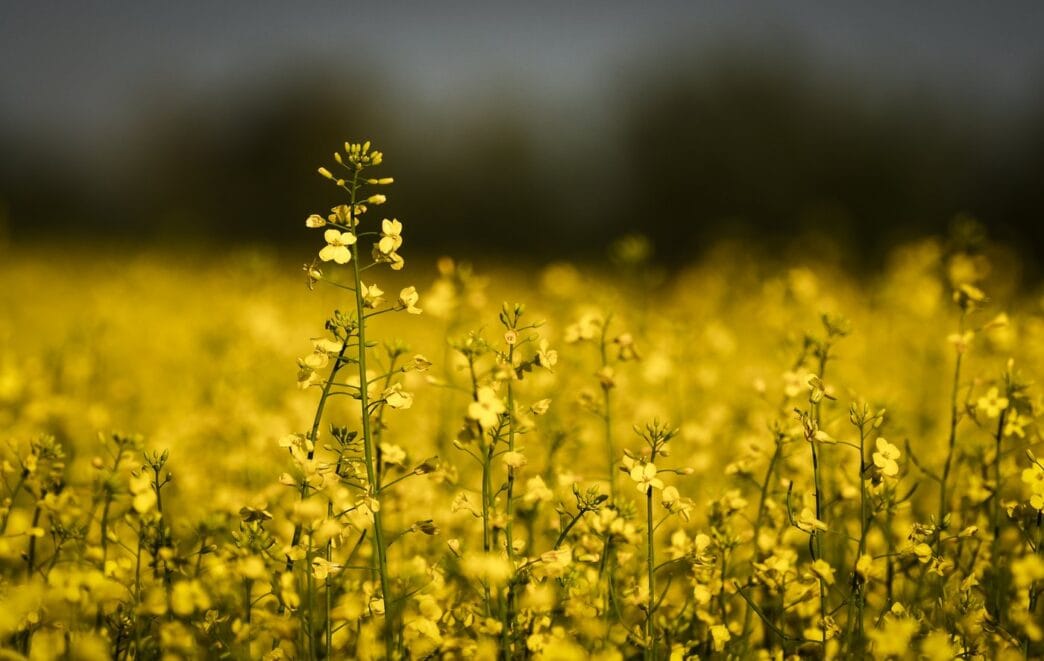
Warmer temperatures and increased sunshine across Saskatchewan have allowed crops to catch up to normal development stages, according to the latest provincial crop report.
Read more: What’s new in Lloydminster: community calendar
The report, tracking the period from July 7 to 13, noted that a shift to drier weather enabled producers to make significant progress with spraying and haying. However, high humidity across the province continues to slow down drying times for haying operations.
Crop development varies by region due to differing environmental conditions, but the vast majority of provincial crops are currently sitting at normal stages of development. This includes 82 per cent of fall cereals, 76 per cent of pulse crops, 68 per cent of spring cereals, and 63 per cent of oilseeds. Most crops are rated in good to fair condition, with cereal crops leading in excellent ratings.
While the heat helped dry out saturated fields, isolated storms still brought varying amounts of moisture and localized hail. The Prince Albert area recorded the highest weekly rainfall at 88 millimetres, followed by Foam Lake at 72 millimetres, Blaine Lake at 65 millimetres, and Redberry at 62 millimetres.
The excess moisture and hail caused minor to moderate crop damage in the east-central, northeast, and northwest regions. Crop damage from gophers was also widely reported, though overall pest pressure remains relatively low.
Topsoil moisture levels remained stable despite the higher temperatures and wind. Cropland topsoil moisture is currently rated as 80 per cent adequate, 17 per cent surplus, and three per cent short. Hayland topsoil moisture is 83 per cent adequate, while pasture topsoil moisture sits at 84 per cent adequate.
Haying operations are steadily progressing, with 10 per cent of the first cut baled or put up as silage, 20 per cent cut, and 70 per cent remaining standing. Quality is highly rated, with 66 per cent considered good and 27 per cent excellent. Some producers have already launched a second cut due to significant earlier rainfall.
Over the coming weeks, producers are expected to finish fungicide applications, wrap up haying operations, and begin preparing equipment for the upcoming harvest.
Read more: Winning ways pave Lloydminster Border Brutes’ provincial lacrosse run