


Alberta’s economic growth is outperforming the rest of Canada, fuelled by rising global oil prices and a steady influx of new residents, according to a report released by ATB Financial on June 11.
Read more: Canada in recession, only G20 country to shrink: Conservatives
The financial institution’s latest economic outlook projects Alberta’s real gross domestic product (GDP) will grow by 2.6 per cent in 2026. The figure is an upward revision from the 2.1 per cent growth forecast in December, a shift ATB attributes to surging oil prices following recent geopolitical conflicts in the Middle East.
By comparison, the national economy is projected to grow by just 0.8 per cent this year.
“Alberta is moving like a fast car restricted to the slow lane,” said Mark Parsons, vice-president and chief economist at ATB Financial. “The momentum is clear, with Alberta leading in job gains and consumer activity.”
The closure of the Strait of Hormuz has pushed West Texas Intermediate (WTI) crude projections to an average of $84 US per barrel for the year. While the price surge has increased provincial revenues, ATB noted that energy producers are maintaining strict capital discipline and holding back on major expenditures due to regulatory and pipeline capacity uncertainties.
Beyond oil, the province is seeing significant population growth driven by relative housing affordability and a strong job market. The influx has boosted consumer spending, with Alberta leading the country in retail sales after a 5.5 per cent year-over-year jump in the first quarter of 2026.
However, Parsons cautioned that the top-line economic resilience is not being felt equally by all Albertans, as high youth unemployment and an elevated cost of living continue to strain household budgets.
“Surging fuel and input costs are squeezing both family and business budgets,” Parsons said, adding that structural improvements in investment and productivity remain vital for long-term growth.
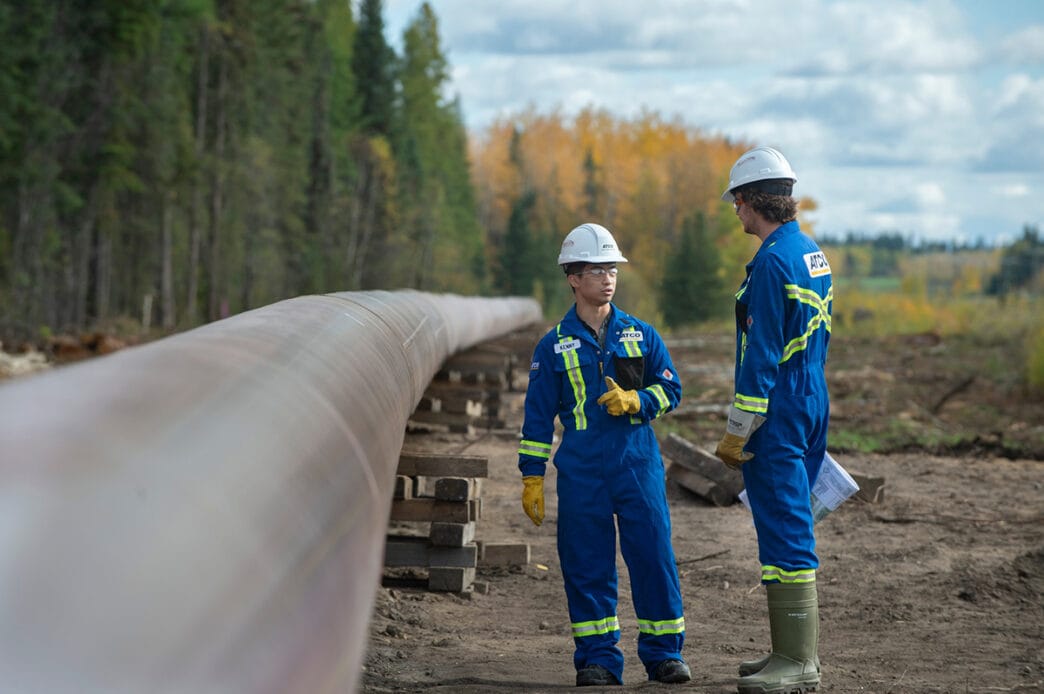
Longer-term economic modeling in the report indicates that major pipeline expansions and carbon capture projects could add 5.1 per cent to Alberta’s GDP between 2027 and 2035.
The province is also seeing increased diversification in downstream sectors like petrochemicals and hydrogen, alongside emerging growth in technology, tourism and aerospace.
Read more: Lloydminster gang shooting: Warrant issued for Turtleford man